Rooted in the sources
The Arizal’s seder hatefillah, clarified from its sources
Rav Ḥaim Vital explicitly identifies the siddur he follows. Reading his instructions in that context allows the nusaḥ, minhagim, and kavanot to be understood together.
״ויש חשיבות מאד לדייק בנוסחאות המדויקות״
“There is great importance in davening with an accurate nusaḥ.”
HaGaon HaRav Naftali Nussbaum שליט"אAv Beit Din, Ahavat Shalom
Rosh Yeshivat Chayei Moshe
Translated from Hebrew
Rav Ḥaim Vital identifies the siddur
״וכדי שלא אאריך אכתוב סדורו כפי דפוס הסידור גדול של כל השנה ממנהג ספרד הנדפס בשנת רפ״ד ליצירה״
“To avoid writing at length, I will set out its order according to The Great Siddur for the Entire Year, following Sephardic practice, printed in the year רפ״ד [1524].”
Rav Ḥaim Vital ZT"LShaar HaTefila
Translated from Hebrew
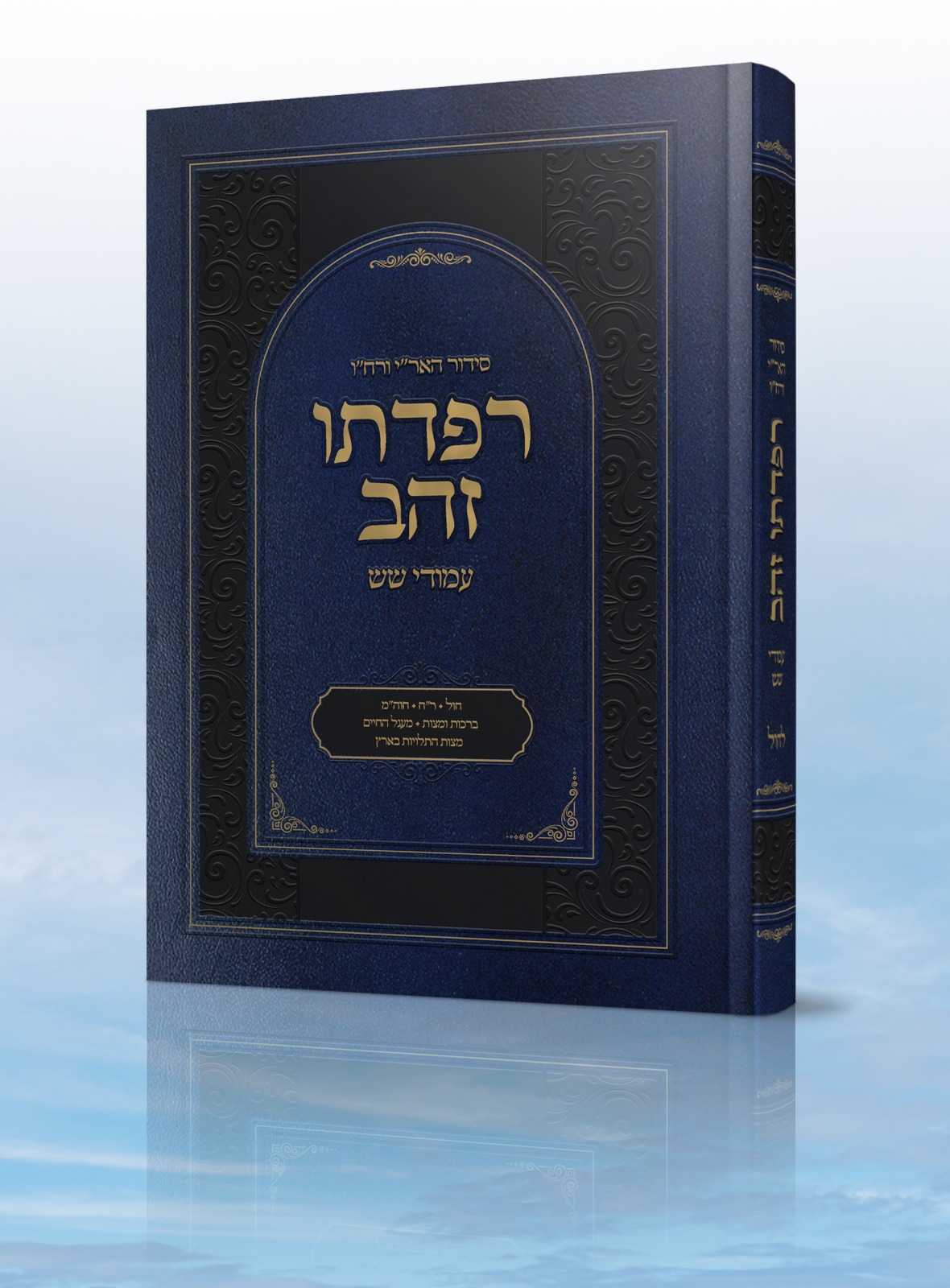
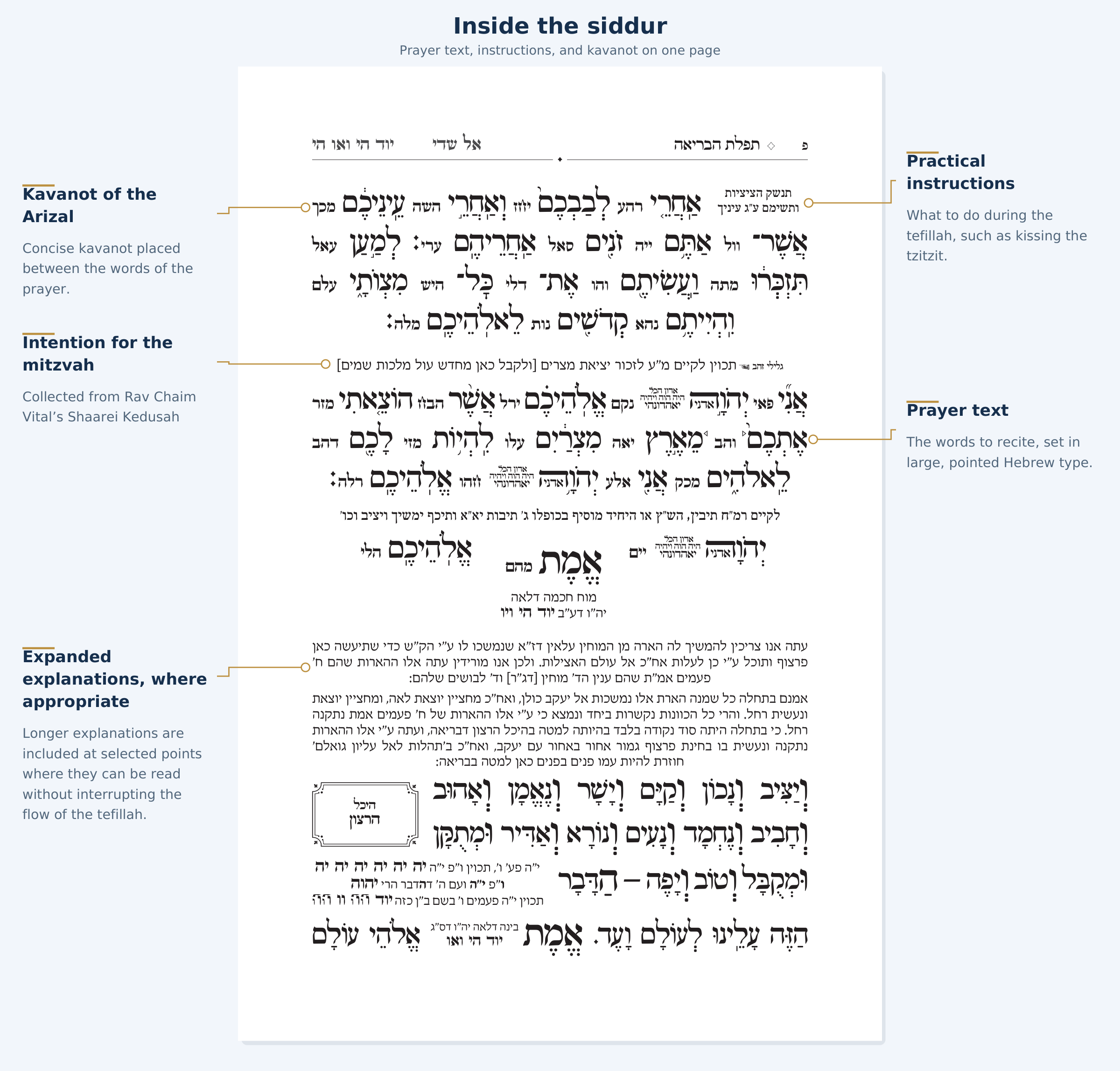
Edited, arranged and designed by Rabbi Michah Markowitz and Rabbi Shaul Goldman, Refidato Zahav takes Rav Ḥaim Vital as its guiding authority for both nusaḥ and minhag. We studied his writings in context, compared them with the early siddurim, and placed concise instructions at the relevant points in the tefillah.
Fonts inspired by the elegant Italian publishing houses and carefully arranged pages make the instructions and minhagim easy to follow. Our Kitzur Kavanot series integrates several forms of concise kavanot into the seder hatefillah, from the meaning and intent of the words and mitzvot to selected kavanot of the Arizal. The Ḥol volume also covers Rosh Ḥodesh and Ḥol HaMoed.